Introduction
A ball mill is one of the most versatile and efficient machines used in industrial processes. Do you know how it works to reduce materials to fine powders or particles? Whether in mining, manufacturing, or research, its role is crucial.
In this article, we will explore how a ball mill operates, its key components, and its significance across various industries. You’ll learn how it uses impact and attrition to break down materials effectively.
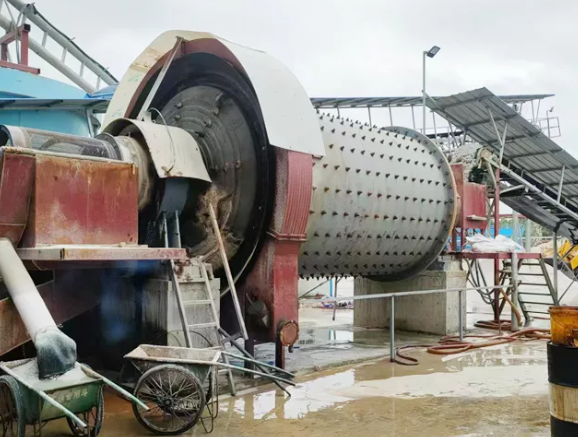
What is a Ball Mill and Its Key Components?
Structure of a Ball Mill
A ball mill is essentially a cylindrical shell that rotates around its horizontal axis. Inside the shell, grinding media (typically steel balls, ceramic balls, or rubber balls) are mixed with the material to be ground. These materials are then reduced to a finer size through continuous impacts and friction between the grinding media and the material.
The ball mill consists of several key components that allow it to perform its function effectively:
Cylindrical Shell: This hollow cylindrical structure holds the material and grinding media. It rotates to provide the motion needed for the grinding process.
Grinding Media: Typically, steel balls or ceramic balls are used as grinding media. The grinding media are responsible for applying force to the material, breaking it into smaller particles. The size and type of the media directly affect the grinding process.
Motor: The motor drives the rotation of the shell. It needs to provide consistent speed to achieve effective grinding.
Feed and Discharge Ports: These ports allow the material to be fed into the mill and the ground material to be discharged after grinding.
Below is a summary of the key components of a ball mill and their functions:
| Component | Description | Function |
| Cylindrical Shell | Hollow cylindrical structure that rotates | Holds the material and grinding media, rotates to provide motion |
| Grinding Media | Steel balls, ceramic balls, or rubber balls | Applies force to break down the material |
| Motor | Powers the rotation of the cylindrical shell | Drives the rotation to facilitate grinding |
| Feed and Discharge Ports | Ports for material input and output | Allows material to enter and exit the mill |
Ball Mill Working Mechanism
The ball mill operates primarily based on two mechanisms: impact and attrition.
Impact: As the mill rotates, the grinding media are lifted and then fall onto the material, causing impacts that break the material into smaller fragments. The larger the media, the stronger the impact, making them ideal for breaking larger particles.
Attrition: The grinding media also rub against each other and the material, leading to further breakdown by friction. This friction is essential for reducing particle size and creating a fine powder.
Together, these actions help to achieve the desired particle size distribution, making ball mills a highly effective tool for fine grinding.
How Does a Ball Mill Operate?
The Impact Process in Ball Milling
The ball mill's most significant action is the impact of the grinding media on the material. As the shell rotates, the grinding media are carried upward by centrifugal force. When they reach a certain height, gravity causes them to fall, striking the material inside the mill. This repeated impact gradually reduces the size of the material.
The size of the grinding media plays a key role here. Larger media have a stronger impact, making them ideal for breaking down larger particles. Smaller media, on the other hand, are more effective at fine grinding, as they provide more contact points and better precision in particle size reduction.
The efficiency of the impact process can be influenced by factors such as:
Rotation speed: Faster speeds lead to higher impact forces.
Grinding media size: Larger media provide stronger impacts, while smaller media are more suited for fine grinding.
Material hardness: Harder materials may require larger grinding media to achieve effective reduction.
The Role of Attrition in Grinding
While impact is essential for breaking large particles, attrition plays a critical role in refining the material further. As the grinding media tumble within the mill, they rub against each other and the material. This friction gradually smoothens the particle edges and breaks down particles to a finer size.
Attrition helps to achieve a uniform particle size, especially for materials that are tough to grind through impact alone. The intensity of attrition is influenced by factors such as the rotation speed of the mill, the size of the grinding media, and the material properties being processed.
Tip: For optimal grinding efficiency, balance both impact and attrition by adjusting the media size and rotation speed. This balance ensures effective grinding without overloading the mill.
Key Factors Affecting Ball Mill Efficiency
Importance of Rotational Speed and Critical Speed
The critical speed of a ball mill is the speed at which the grinding media will cling to the sides of the mill, causing the mill to stop grinding. To effectively grind material, the mill must operate above this speed, ensuring continuous impact and grinding.
Operating the mill too slowly will result in inefficient grinding, while too fast can cause excessive wear on the grinding media and equipment. Therefore, selecting the right rotational speed is essential for achieving the desired material reduction.
The rotational speed also affects the energy efficiency of the grinding process. Operating at the right speed ensures that the mill’s energy is used effectively, minimizing energy waste.
Effect of Grinding Media Size and Type
The size and type of grinding media directly affect the grinding process. Larger balls deliver more impact force, which is useful for coarse grinding, while smaller balls are better suited for fine grinding. Additionally, the material of the grinding media, such as steel or ceramic, impacts the efficiency and purity of the grinding process.
The density and shape of the media also play a crucial role in the mill's performance. Steel balls, for instance, are highly durable and offer high impact force, while ceramic media are better suited for applications requiring minimal contamination. Use a combination of different sized media to balance between coarse and fine grinding stages. This combination improves grinding efficiency and helps maintain a consistent product quality.
Material Properties and Their Impact on Milling
Different materials require different milling conditions. Harder materials, for instance, may need larger and denser grinding media to achieve effective reduction. Conversely, softer materials can be ground using smaller, lighter media.
The moisture content, brittleness, and hardness of the material also affect the mill's efficiency. Knowing the material’s properties helps in selecting the right milling conditions.
For example, when grinding ore for mineral extraction, it's crucial to adjust the grinding process based on the ore's hardness and particle size requirements.Here’s a summary of the key factors that influence the efficiency of ball milling based on material properties:
| Factor | Description | Impact on Efficiency |
| Rotational Speed | Speed at which the ball mill rotates | Affects grinding effectiveness; too slow = inefficient, too fast = wear on equipment |
| Grinding Media Size | Size of the grinding media (steel, ceramic, etc.) | Larger media = stronger impact, smaller = better for fine grinding |
| Material Hardness | Hardness of the material being ground | Harder materials require larger or denser media to grind effectively |
| Material Properties | Including moisture content, brittleness, etc. | Impacts the type of grinding media and milling conditions |
Common Applications of Ball Mills
Ball Mills in Mining and Mineral Processing
Ball mills are widely used in the mining industry for ore grinding. They help in breaking down ores into smaller sizes for further processing. In mineral processing, ball mills are crucial in obtaining high-purity materials and ensuring that the ore meets the required specifications.
The ability to grind ores to fine particles is critical for the extraction of valuable minerals, such as gold, copper, and silver. By achieving the correct particle size, ball mills help optimize recovery rates during the extraction process.
Industrial Uses of Ball Mills in Manufacturing
Ball mills are equally important in the manufacturing sector. They are used in the production of materials such as cement, ceramics, and paints. By grinding raw materials into fine powders, they ensure that these materials are homogenous and consistent in texture.
Cement production, for example, relies on ball mills to grind clinker into fine powder, which is then used in the final product. The fine particle size ensures better cement quality and uniformity.
Ball Mills in Research Laboratories
In laboratories, ball mills are used to grind small amounts of material for testing and analysis. This is particularly useful in research applications where small samples need to be processed efficiently. Ball mills provide precision grinding for a wide range of applications, from pharmaceuticals to material science.
Laboratory-scale mills, such as planetary ball mills, offer superior control over particle size and distribution, making them ideal for research purposes.
Note: For laboratory-scale ball milling, specialized mills such as planetary ball mills are often used for their precise control and ability to grind smaller amounts of material.
Types of Ball Mills and Their Unique Features
Planetary Ball Mill: Features and Applications
The planetary ball mill is a specialized type of mill used for fine grinding in laboratory settings. It uses multiple rotating bowls to produce high-energy collisions between the grinding media. This results in extremely fine powders, often down to the nanoscale.
Planetary ball mills are commonly used in material research, especially when working with materials that require precise and uniform particle size distributions. They are particularly useful for grinding hard and brittle materials that need to be processed to very fine levels.
Vibration Ball Mill: Enhancing Efficiency
The vibration ball mill is designed to increase grinding efficiency through high-frequency vibrations. These vibrations improve the interaction between the grinding media and the material, leading to faster and more efficient grinding.
This type of ball mill is ideal for materials that need rapid size reduction and for applications where high throughput is essential. Vibration mills can often achieve finer particle sizes in shorter amounts of time compared to traditional ball mills.
Horizontal Rolling Ball Mill: Benefits and Limitations
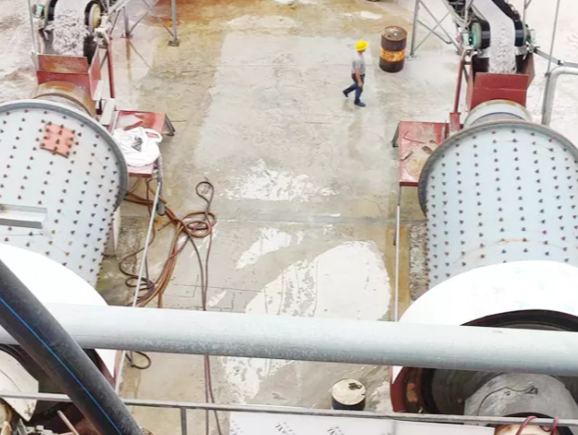
The horizontal rolling ball mill is the most common type of ball mill used in industrial applications. Its primary advantage lies in its simplicity and large capacity. It works by rotating a horizontal cylinder filled with grinding media, which leads to continuous grinding.
While effective for bulk processing, it may not be as efficient for ultra-fine grinding compared to other specialized mills like planetary ball mills. However, it remains a popular choice due to its cost-effectiveness and ease of use for larger-scale operations.Choose the type of ball mill based on your application—planetary mills for fine research, vibration mills for rapid grinding, and horizontal mills for bulk production.
How to Choose the Right Ball Mill and Media?
Selecting the Best Grinding Media
When choosing grinding media, consider the following factors:
Material: Steel, ceramic, and other materials all have unique properties that affect the efficiency of grinding.
Size: Larger media are better for coarse grinding, while smaller media are ideal for fine grinding.
Durability: Steel balls are durable but may wear out faster than ceramic or other media.
Understanding your material and the desired end product will guide you in choosing the appropriate grinding media. Using the right combination ensures optimal grinding efficiency.
Choosing the Right Ball Mill for Your Needs
The selection of a ball mill depends on several factors, including:
Required throughput: Larger mills are suitable for high-volume production.
Type of material: Some materials require specialized mills to ensure proper grinding.
Grinding fineness: If ultra-fine particles are required, specialized mills may be needed.
Tip: Always align the type of mill and media with your production goals for the most efficient operation. Ensure the mill you select matches the grinding needs of your specific industry.
Conclusion
In conclusion, ball mills are essential tools in industries for grinding materials efficiently. They provide versatility in mining, manufacturing, and research applications. Understanding how to choose the right ball mill and grinding media improves the overall grinding process. By optimizing factors like media size, material properties, and mill speed, you can achieve better efficiency and higher product quality. With the right ball mill, you can minimize waste while maximizing results.
Nanjing Sinonine Heavy Industry Science and Technology Co., Ltd. offers high-quality ball mills designed to provide superior performance, improving productivity across industries.
FAQ
Q: What is a ball mill and how does it work?
A: A ball mill is a grinding machine that uses steel or ceramic balls to reduce material into fine powders through impact and attrition. It rotates, causing the grinding media to collide with the material, breaking it down into smaller particles.
Q: What are the main uses of a ball mill?
A: Ball mills are used for grinding materials in industries like mining, manufacturing, and research. They are ideal for reducing ores, minerals, and other raw materials into fine powders.
Q: How do I choose the right ball mill for my project?
A: Choose a ball mill based on factors like material hardness, required particle size, and throughput. The right media size and mill speed are essential for achieving the desired results.
Q: Why is the rotational speed important in a ball mill?
A: Rotational speed determines the effectiveness of grinding. If the mill rotates too slowly, it won't achieve efficient grinding; if it rotates too quickly, it may cause excessive wear on the equipment.
Q: How does a ball mill compare to other grinding mills?
A: Compared to other grinding mills, a ball mill is more versatile and can handle a wider range of materials. It uses impact and attrition, making it suitable for both coarse and fine grinding.
Q: What are the advantages of using a ball mill?
A: Ball mills provide uniform grinding, making them ideal for producing consistent particle sizes. They are efficient, reliable, and can be used for continuous operation in various industries.


