Introduction
Are you looking for an efficient way to dry heat-sensitive materials? The fluid bed dryer (FBD) might be the solution you're seeking. This innovative technology is widely used in industries such as pharmaceuticals, food processing, and chemicals for its ability to dry materials quickly and evenly.
In this article, we'll explore how fluid bed dryers work, their key components, and their various applications. You'll learn how to select the right model for your needs, ensuring that you can improve efficiency and reduce waste in your production process.
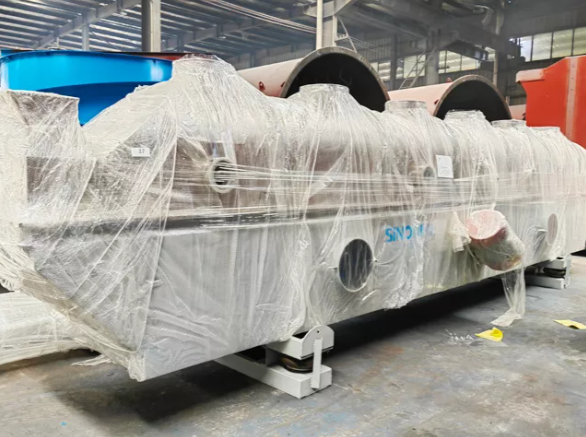
Understanding Fluid Bed Dryers
What is a Fluid Bed Dryer?
A fluid bed dryer is a piece of equipment designed to dry solid materials by suspending them in a stream of hot air. The process begins when hot air is blown through a perforated plate or screen at the bottom of the drying chamber. The air flows upward with enough force to lift and suspend the particles, causing them to behave like a fluid. This allows the hot air to surround each particle, ensuring that all sides are exposed to the heat, which results in rapid and uniform drying.
The fluid bed drying process is particularly effective for materials like powders, granules, and small particles. As the particles are suspended and agitated, they mix with the airflow, ensuring even moisture removal. This method offers more consistent results compared to other drying techniques, such as rotary dryers or tray dryers. Furthermore, fluid bed dryers are especially advantageous for heat-sensitive materials because they can dry the product at lower temperatures while maintaining its integrity.
Key Components of a Fluid Bed Dryer
Fluid bed dryers are composed of several essential components that work together to create a controlled and efficient drying process. The key components include:
Drying Chamber: This is the main area where the material is suspended and dried. The chamber is typically designed to facilitate optimal airflow and ensure the even distribution of heat.
Air Distribution System: A system of ducts and filters ensures that the air flows evenly across the material. The uniform distribution of airflow is critical to achieving even drying and preventing clumping.
Heating Unit: The heating unit provides the hot air necessary for drying. This can include electric heaters, steam, or hot water systems, depending on the specific needs of the process.
Control System: This is the brain of the fluid bed dryer, which monitors and adjusts parameters such as temperature, airflow, and humidity to ensure the optimal drying environment is maintained throughout the process.
These components work together to create a consistent and efficient drying process, ensuring the highest quality of product output.
How Fluid Bed Dryers Work
The Fluidization Process Explained
The fundamental process behind fluid bed dryers is fluidization. This occurs when air is blown through the material in such a way that the particles are lifted and suspended, making them behave like a liquid. As the hot air flows upward through the perforated plate or screen, it creates turbulence, causing the particles to move freely, much like a fluid. This movement ensures that every particle is exposed to the hot air, allowing for uniform heat transfer and moisture evaporation.
Fluidization is a key factor that makes fluid bed dryers so efficient. By maintaining the particles in constant motion, the dryer prevents clumping and allows for even drying across the entire batch. The fluid-like behavior of the particles also ensures that the heat is evenly distributed, preventing any hot spots that could cause uneven drying or overheating.
Heat and Moisture Transfer in Fluid Bed Drying
The heat transfer in fluid bed drying occurs through convection, where the hot air directly transfers heat to the particles. As the hot air moves through the material, it heats the particles, causing the moisture inside them to evaporate. This moisture-laden air is then drawn out of the system through exhaust fans, and fresh, dry air is introduced to continue the drying process.
The key to the efficiency of fluid bed dryers lies in the rapid heat transfer and effective moisture removal. Since each particle is exposed to the hot air from all sides, the drying process is much faster compared to other methods. Additionally, because the hot air constantly flows through the material, the moisture is carried away quickly, leaving the material dry and ready for further processing.
Precise Control of Temperature and Moisture
One of the major benefits of fluid bed dryers is the ability to precisely control the drying conditions. Modern fluid bed dryers come equipped with sensors that constantly monitor the temperature, airflow, and moisture levels in real time. This allows operators to adjust settings on the fly to ensure that the material is dried to the exact specifications.
The control system in fluid bed dryers typically includes automated features that reduce the potential for human error, making the process more reliable and consistent. This is especially important in industries such as pharmaceuticals, where precise moisture content is crucial for product stability and effectiveness. Automation in newer fluid bed dryers also helps optimize energy usage, leading to a more efficient and cost-effective drying process.
Types of Fluid Bed Dryers and Their Uses
Batch vs. Continuous Fluid Bed Dryers
Fluid bed dryers can be categorized based on their operating mode: batch or continuous. Each type has its own set of advantages, depending on the specific requirements of the production process.
Batch Fluid Bed Dryers: These dryers process fixed quantities of material in discrete cycles. The material is loaded into the chamber, dried, and then removed once the drying process is complete. Batch fluid bed dryers are ideal for small-scale production or test runs, as they provide excellent control over drying conditions and can handle a wide variety of materials.
Continuous Fluid Bed Dryers: In contrast, continuous dryers are designed for high-volume production. Material is continuously fed into the dryer, where it moves through different drying zones before being discharged. Continuous fluid bed dryers are best suited for large-scale production where consistent drying over extended periods is required. They can handle much larger volumes of material than batch dryers.
| Feature | Batch Fluid Bed Dryer | Continuous Fluid Bed Dryer |
| Production Mode | Fixed quantity per cycle | Continuous flow of material |
| Suitable for | Small-scale production or testing | Large-scale, high-volume production |
| Drying Time | Can take longer due to stop-start | Continuous, can handle higher volumes |
| Flexibility | Highly flexible, handles various materials | Best for uniform, consistent materials |
| Control Over Drying Process | Excellent for precise control | Less precise due to continuous flow |
Static vs. Vibratory Fluid Bed Dryers
Fluid bed dryers can also be categorized based on how the material is agitated during the drying process:
Static Fluid Bed Dryers: These dryers rely solely on airflow to lift and suspend the particles. The material stays relatively stationary within the chamber, and it is the airflow that moves the particles and ensures even drying.
Vibratory Fluid Bed Dryers: These dryers incorporate mechanical vibration to help agitate the material. The vibration enhances the fluidization process, helping to keep the particles moving and preventing clumping. This type of dryer is particularly useful for materials that are sticky or prone to clumping, such as wet powders or moist granules.
Specialized Fluid Bed Drying Systems
In addition to batch and continuous fluid bed dryers, there are several specialized fluid bed systems designed to meet specific needs:
Spouted Bed Dryers: These dryers are used for large or dense particles like seeds or plastics. The air is directed in such a way that it creates a "spout" within the bed, which helps suspend larger particles more effectively.
Multi-stage Fluid Bed Dryers: These dryers use multiple drying zones with different temperature and airflow conditions. Multi-stage systems improve energy efficiency and allow for better control over the drying process, making them suitable for products that require different drying stages.
Fluid Bed Dryers in Various Industries
Pharmaceutical Industry Applications
Fluid bed dryers are a vital component of the pharmaceutical industry. They are used to dry granules, powders, and other drug formulations, ensuring that they meet the required moisture content for stability and quality. Moisture control is essential in pharmaceuticals, as too much moisture can lead to degradation, while too little can affect the product's effectiveness.
Fluid bed dryers are also used for pellet coating in the pharmaceutical industry. The coating process is crucial for controlled drug release, which is necessary for the effectiveness of certain medications. Fluid bed dryers ensure that the pellets are dried uniformly and that the coating is applied consistently, improving the product's overall quality.
Applications in Food Processing
In food processing, fluid bed dryers are widely used to dry milk powder, coffee, spices, and other food ingredients. The even drying provided by fluid bed dryers helps preserve the nutritional content of the food, maintain flavor, and extend shelf life.
For instance, when drying milk powder or baby formula, maintaining the right moisture content is crucial for ensuring that the product is safe and nutritious. Fluid bed dryers can provide precise temperature control, which is essential for drying heat-sensitive products like milk powder without compromising its quality.
Chemical and Mineral Industry Uses
Fluid bed dryers are also critical in the chemical and mineral industries. They are used for drying materials such as polymers, fertilizer granules, and mineral concentrates. In these industries, controlling moisture is essential for ensuring that the material is stable for storage, transport, and further processing.
For example, in the fertilizer industry, fluid bed dryers are used to dry urea granules and other fertilizer products. The even and rapid drying ensures that the granules are of uniform size and moisture content, making them easier to handle and use.
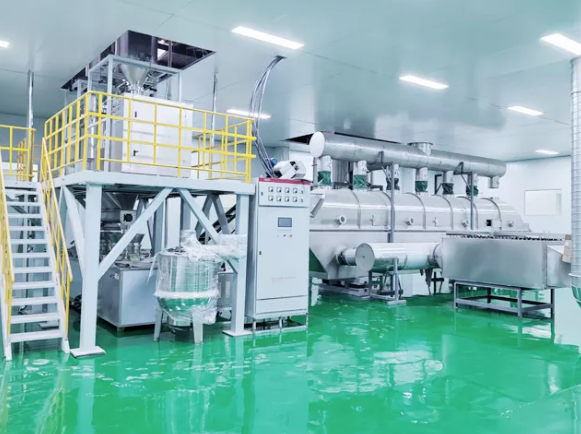
Benefits and Limitations of Fluid Bed Dryers
Key Benefits of Fluid Bed Dryers
Fast and Even Drying: Fluid bed dryers ensure that material dries quickly and evenly, reducing overall drying time. The constant movement of particles in the air stream ensures that all sides of the material are exposed to the heat.
Precise Control: Fluid bed dryers offer precise control over temperature and moisture levels, which is essential for producing high-quality products, especially in industries like pharmaceuticals and food processing.
High Energy Efficiency: Fluid bed dryers are more energy-efficient than many other drying methods. The continuous airflow and heat transfer mechanism allow for faster drying, saving both time and energy.
Limitations and Challenges in Fluid Bed Drying
Particle Size: The efficiency of the fluidization process can be influenced by the size and shape of the particles. Materials that are too large or too small may not fluidize properly, leading to uneven drying.
Sticky Materials: Fluid bed dryers may not be suitable for materials that are sticky or clump together. In these cases, alternative drying methods may be necessary.
| Benefits | Limitations |
| Fast and Even Drying | Particle Size Impact |
| Material dries quickly and uniformly. | Smaller or larger particles may not fluidize well. |
| Precise Control of Temperature | Sticky Materials |
| Control over drying conditions to ensure quality. | May not be suitable for sticky or clumping materials. |
| Energy Efficiency | Not Suitable for All Materials |
| More energy-efficient than traditional methods. | Not ideal for materials that need to maintain their shape. |
How to Select the Right Fluid Bed Dryer for Your Needs
Considering Material Properties
When selecting a fluid bed dryer, it is crucial to consider the material's properties, including particle size, moisture content, and heat sensitivity. Materials that are too large or too small may not fluidize well, which can reduce the efficiency of the drying process. Also, heat-sensitive products may require a dryer with precise temperature control to prevent damage.
Choosing Between Batch and Continuous Dryers
Choosing between a batch or continuous fluid bed dryer depends on your production needs. Batch dryers are ideal for small-scale production or testing, offering precise control over the drying process. Continuous dryers, on the other hand, are better suited for large-scale, high-volume production where consistent drying is necessary.
Evaluating Energy Efficiency and Operating Costs
When selecting a fluid bed dryer, it is important to consider the energy efficiency and operating costs. Look for dryers that offer energy-saving features, such as heat recovery systems or automated controls that adjust based on real-time data. This will help optimize energy usage and reduce overall costs in the long run.
| Feature | Description |
| Heat Recovery System | Recovers and reuses heat from the exhaust air to improve efficiency. |
| Automated Controls | Adjusts airflow and temperature automatically based on real-time data. |
| Energy Monitoring Systems | Tracks energy usage to optimize performance and reduce waste. |
| Low Energy Consumption | Designed to minimize energy use during the drying process. |
Conclusion
Fluid bed dryers are vital in modern industries for their efficiency, energy savings, and precise control. They play a crucial role in sectors like pharmaceuticals, food processing, and chemicals, ensuring high-quality drying while minimizing waste. Selecting the right fluid bed dryer can optimize drying processes, improve consistency, and reduce operational costs.
Nanjing Sinonine Heavy Industry Science and Technology Co., Ltd. offers high-quality fluid bed dryers that enhance productivity and operational efficiency. Their products stand out for their energy efficiency and advanced control systems, making them an ideal choice for businesses aiming to improve production processes and reduce costs.
FAQ
Q: What is a fluid bed dryer?
A: A fluid bed dryer (FBD) is a drying equipment that uses hot air to lift and suspend particles, creating a fluid-like state for even and rapid drying. It's commonly used in industries like pharmaceuticals and food processing.
Q: How does a fluid bed dryer work?
A: A fluid bed dryer works by blowing hot air through a perforated plate, lifting and suspending particles, allowing for uniform heat transfer and moisture removal.
Q: What are the advantages of using a fluid bed dryer?
A: Fluid bed dryers offer fast, uniform drying, precise control over temperature and moisture, and high energy efficiency, making them ideal for sensitive materials.
Q: Why is a fluid bed dryer used in the pharmaceutical industry?
A: In pharmaceuticals, a fluid bed dryer ensures consistent drying of granules and powders, maintaining the product's stability and quality by controlling moisture levels.
Q: What types of materials are best suited for a fluid bed dryer?
A: Fluid bed dryers are best for drying powders, granules, and small particles, particularly those that are heat-sensitive or require precise moisture control.


