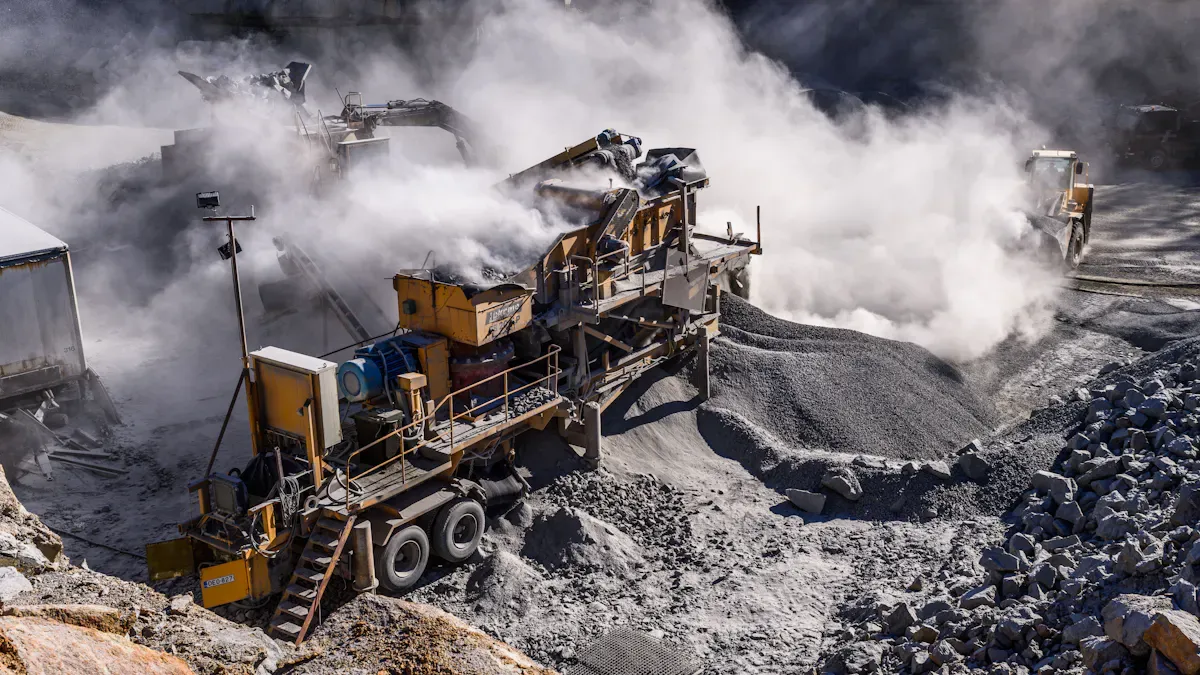
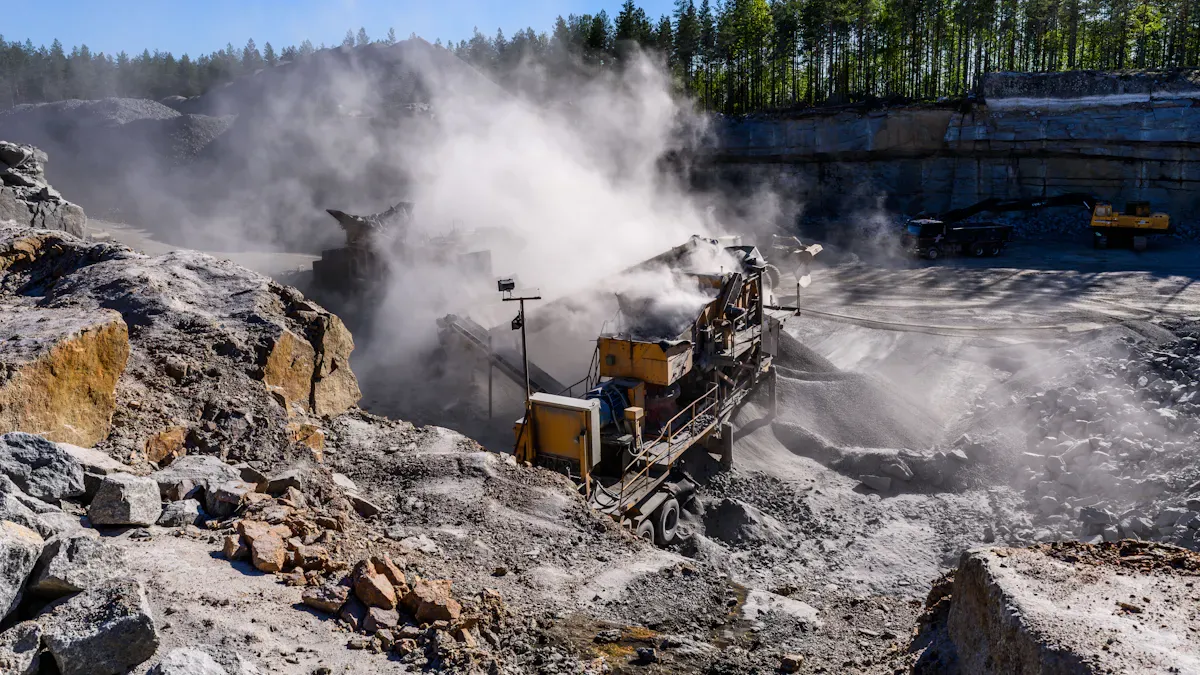
Jaw crushers are strong machines that crush rocks and minerals. People use them in mining and building work. These machines make big pieces smaller so they are easier to move. Learning about their history helps people see how new ideas made them better. New technology has made jaw crushers work better and use less energy. Their growth has helped many industries move forward.
Jaw crushers are still very important for building and getting resources around the world.
Key Takeaways
Jaw crushers started as simple tools. Now they are advanced machines. They make crushing rocks faster and safer. Eli Whitney Blake invented the jaw crusher in 1858. This was a big step for mining and building work. Today, jaw crushers use less energy. This saves money and helps the environment. They also keep workers safer. Digital technology and automation are changing jaw crushers. These changes help people watch and fix the machines better. This makes them work even better. Jaw crushers are very important in many industries. They help crush materials quickly. They also help companies use better and greener methods.
Jaw Crushers: Early History
Predecessors to Jaw Crushers
People have worked with rock for thousands of years. In the early days, workers used simple tools like hammers and chisels to break large stones. These methods took a lot of time and energy. The history of crushing shows that people needed better ways to handle hard materials. As mining and building projects grew, the demand for faster and more powerful tools increased. The first crushing machines appeared to help with this problem. These early machines used hand power or animals to move heavy parts and crush rock. They made the work easier but still had many limits.
Blake Jaw Crusher Invention
In 1858, Eli Whitney Blake changed the world of rock crushing. He invented a new machine called the jaw crusher. This invention used two strong plates to press and break rock into smaller pieces. The design made the process faster and safer. Blake’s jaw crusher became a key tool in mining and construction. It helped workers handle large amounts of rock with less effort. The invention marked an important step in the history of jaw crushers. Many modern machines still use ideas from Blake’s original design. The jaw crusher set the stage for more advanced machines in the future.
The journey from simple tools to powerful jaw crushers shows how technology can solve big problems. The history of crushing continues to shape the way people work with rock today.
Evolution of Jaw Crusher Design
Key Technological Milestones
Jaw crusher design has changed a lot over time. Engineers wanted machines that crush more rocks with less work. They made the frame stronger to help the machine last longer. Early jaw crushers used cast iron, but later ones used steel. Steel made the machines tougher and better at crushing. Bolted frames became common because they are easy to fix. Workers can take apart the machine and repair it fast.
Manufacturers improved how the jaw crusher moves. They added better bearings and stronger shafts. These changes let the jaw crusher crush bigger rocks. The machines became safer and more dependable. Engineers added new features to save energy. Some jaw crushers use electric motors that use less power. Others have systems to cut down dust and noise. These changes help keep workers safe and protect nature.
Mobility became important for jaw crushers. Some machines have wheels or tracks now. Workers can move them around the job site easily. This makes crushing rocks faster and simpler. Digital technology has changed jaw crushers too. Some machines have sensors that check how they work. These sensors help workers spot problems before they get worse.
Single Toggle and Modern Features
The single toggle jaw crusher was a big change in design. This type uses one moving part to crush rocks. It works with a simple up-and-down motion. The single toggle design makes the jaw crusher lighter and easier to fix. It also uses less energy than older designs. Many modern jaw crushers use this design because it is strong and simple.
Manufacturers like Sinonine have helped improve jaw crusher technology. Sinonine makes jaw crushers with deep crushing cavities. This lets the machine crush more rocks at once. Their jaw crushers have a great crushing ratio and give even-sized pieces. The machines use a safe and reliable lubrication system. This system makes maintenance easy and keeps the jaw crusher working well.
Sinonine also works on making jaw crushers use less energy. Their machines can lower energy use by up to 30%. This helps companies save money and protect nature. The machines make less noise and dust, which is good for workers. Sinonine uses strong materials to build their jaw crushers. This makes the machines last longer and work well in tough jobs.
Modern jaw crushers have many ways to change the size of the finished product. Workers can adjust the settings to fit different needs. Some jaw crushers have digital controls that make these changes easy. These features show how much jaw crusher design has improved. The history of jaw crushers shows constant progress and new ideas.
Today, jaw crushers are key machines in mining and construction. Their design keeps improving as new technology comes out.
Jaw Crushers in Industry
Applications and Impact
Jaw crushers are used in many jobs. Mining companies use them to crush big rocks. This helps workers get minerals from the ground. Construction teams use jaw crushers to make gravel for roads. Factories use them to get materials ready for glass and ceramics. Jaw crushers are strong and last a long time. They can crush hard things without breaking. These machines help companies save money. They do not need much fixing or care. Jaw crushers are not very loud and do not make much dust. This helps keep workers safe and healthy.
Jaw crushers help many industries by making work faster and easier.
Comparison with Other Crushers
There are different crushers for mining and building. Jaw crushers use two plates to crush rocks. They are good for big, hard rocks. Cone crushers use a spinning cone to crush rocks. They make smaller pieces and work best with medium-hard rocks. Impact crushers use fast parts to hit and break rocks. They are good for soft rocks and recycling.
Here is a simple table to compare these machines:
Crusher Type | Best For | Output Size | Maintenance |
Jaw Crushers | Hard, large rocks | Medium | Low |
Cone Crushers | Medium-hard rocks | Fine | Medium |
Impact Crushers | Soft rocks, waste | Fine | High |
Jaw crushers are easy to use and fix. They can crush many kinds of rocks. Many companies use jaw crushers for important work.
Future Trends in Jaw Crushers
Digitalization and Automation
Digital technology is changing jaw crushers. Sensors check how machines work all the time. Operators use computers to watch the crushing process. They can find problems early and fix them fast. Automation lets jaw crushers run with less help from people. Machines change settings by themselves to keep crushing smooth. Remote controls let workers manage jaw crushers from far away. This makes things safer and cuts down on machine stops.
Manufacturers add smart features to jaw crushers. These features include automatic lubrication and tools that check themselves. The machines send alerts when they need fixing. Sensor data helps companies plan repairs and stop surprise breakdowns. Digitalization makes jaw crushers work better and last longer.
Digital tools help workers save time and keep machines working.
Eco-Friendly Innovations
Environmental worries bring new changes to jaw crushers. Engineers make machines that use less energy. Some jaw crushers have electric motors that use less power. Using less energy means less pollution and lower costs for companies. Manufacturers also work to cut dust and noise. Special filters and covers keep dust inside the machine. Quiet motors and sound barriers protect workers from loud sounds.
Recycling is important for modern jaw crushers. Machines crush old concrete and rock so it can be used again. This cuts waste and saves natural resources. Companies pick jaw crushers that follow strict environmental rules. Eco-friendly designs help protect nature and support good practices.
Eco-Friendly Feature | Benefit |
Energy-efficient motors | Lower power use |
Dust control systems | Cleaner work environment |
Noise reduction | Safer for workers |
Recycling capabilities | Less waste |
Eco-friendly jaw crushers help industries build a better future.
Jaw crushers are not the same as before. Engineers made them safer and better. These machines help many industries work fast and safe. New technology like sensors and motors saves energy. Jaw crushers will get smarter and greener in the future. People will see more changes as time passes.
FAQ
What is a jaw crusher used for?
A jaw crusher makes big rocks into small pieces. People use jaw crushers in mining, building, and recycling. These machines help get materials ready for other jobs or for building things.
How does a single toggle jaw crusher work?
A single toggle jaw crusher has one moving jaw. The jaw goes up and down to crush things against a still plate. This type uses less energy and needs less fixing.
Why do companies choose Sinonine jaw crushers?
Companies pick Sinonine jaw crushers because they are strong and work well. They crush a lot at once and save energy. These machines are easy to care for and work well in hard jobs.
How can operators maintain a jaw crusher?
Operators should check the oil and look at worn parts often. They also need to clean the machine on a regular basis. Doing what the maker says helps the jaw crusher work well and stay safe.